D-Day Sites to Visit in Normandy from Paris

Updated 2026 — I’ve done this trip myself, dedicating several days exclusively to the D-Day sites.
If you’re planning a trip to Paris, the Normandy Landing beaches are worth the detour — this stretch of French coast was the stage for one of the most significant moments of World War II, and standing where it actually happened hits differently than reading about it.
This guide is focused purely on the D-Day sites, the beaches, museums, cemeteries, and memorials. I’m working on a separate post about the rest of Normandy (the coast, the villages, the food) for anyone who wants to see the region beyond the war history, I’ll link it here once it’s up.
My Experience: 4 Days Dedicated Entirely to D-Day
We did this as a camper van trip, 4 days, 5 of us, and every single stop was D-Day-related: bunkers, museums, tanks, bomb craters, the beaches themselves. We were traveling with friends who are genuinely passionate about WWII history, and the trip was built entirely around that.
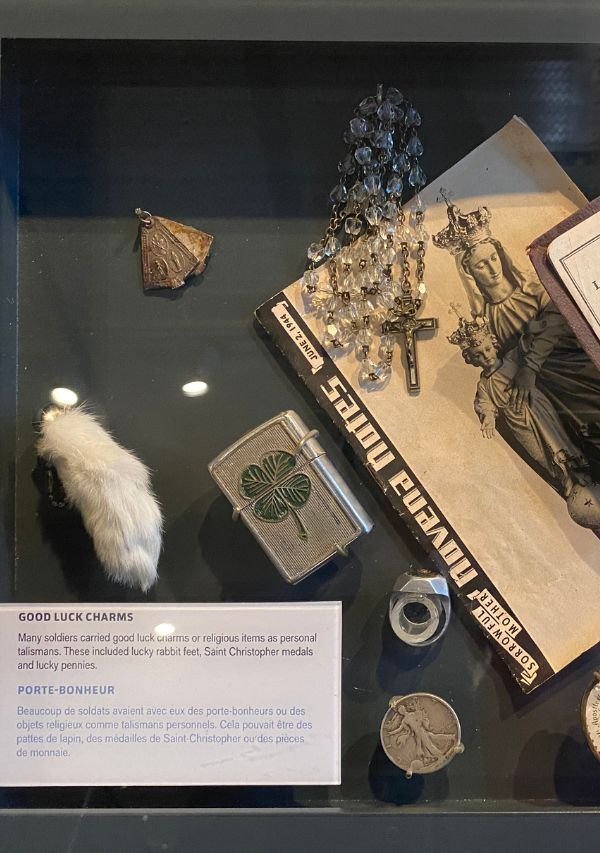
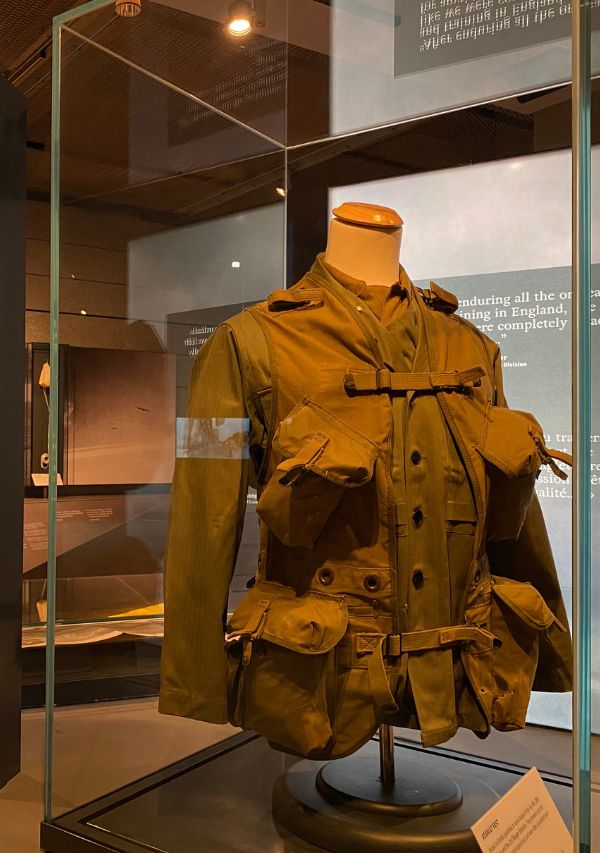
I’ll be honest with you: by the end, it was a lot for me. Four straight days of nothing but war history is intense, even when you’re interested in it. But I don’t regret it, reading the stories on-site, seeing the photographs and artifacts, and actually standing in the place where it all happened was genuinely moving in a way that reading about it beforehand hadn’t prepared me for.
If you’re traveling with people who love this kind of history the way our friends did, they’ll be thrilled, there’s no shortage of bunkers, craters, and museums to keep them busy for days.
My honest recommendation: if D-Day history isn’t your main reason for visiting Normandy, don’t feel you need to dedicate multiple full days to it the way we did. A well-planned single day covering the highlights gives you a genuinely powerful experience without the fatigue of doing it wall-to-wall for four days straight.
How to Get to the Normandy Landing Beaches From Paris
By Car
Car is the most common way to reach the Normandy Landing beaches from Paris. The trip takes about 3 hours, depending on traffic.
You can easily rent a car in Paris. Take the A13 freeway toward Caen, then follow the signs to the different landing beaches — the area is very well signposted.
By Train
You can take a train from Paris Saint-Lazare to Bayeux, the closest town to the beaches. The trip takes about 2.5 hours. From there, you can take a bus or a taxi to reach the different beaches.
By Bus
Companies like Flixbus offer routes from Paris to the Normandy Landing beaches area, taking around 4 hours depending on traffic. Common stops include Bayeux and Caen, from where you can take a taxi or local bus onward.
Organized Visit
If you’d rather not handle the logistics yourself, you can join an organized excursion from Paris, offered by companies like Civitatis and Viator. These day trips run around 14 hours and usually cover the American Cemetery, the Landing Museum, and the main beaches.
Is it Possible to Visit the Normandy D-Day Sites in 1-Day?
Yes, if you plan carefully. It depends on your available time and how deep you want to go, but if you only have one day, focus on the sites that are close together: the Landing Beaches, the Normandy American Cemetery, and the Normandy Landing Museum in Arromanches. These three are relatively close and give you a strong overview.
If you want to see more, Pointe du Hoc, Sainte-Mère-Église, the Caen Memorial Museum, you’ll need more time. As I mentioned above, we spent 4 days on this exclusively, and we still didn’t see everything. The area has more D-Day sites than most people realize.
Where to Stay Near the Normandy Landing Beaches
If you’re basing yourself here for more than a day, staying close to the sites saves you a lot of driving time. Some options:
- Ferme de la Rançonnière
- La Villa Port Winston – Face Mer B&B
- Château La Chenevière
- City’O apparthotel
- Hotel La Rosière
You’ll also find plenty of options in Bayeux and Caen, both a short drive from the beaches.
If you’re doing this by camper van, like we did: book your campsite in advance, especially in high season. A heads-up from experience, we went in March, before the campsites had opened for the year, and ended up sleeping in a designated motorhome area (aire de camping-car) instead.
If you’re traveling outside the April–September window, check ahead, because a lot of campgrounds close for winter. Some popular options when they’re open:
- Camping Port’Land
- Camping Le Fanal
- Camping Le Clos de Balleroy
- Recommended reading: Visiting Loire Valley Castles in one day from Paris
Tips for Visiting the Normandy Landing Beaches
Plan your route in advance. The D-Day sites are spread out along the coast, not clustered in one town — decide which ones matter most to you before you go, and check opening hours, since some museums close certain days off-season.
Consider a guide or audio guide. The historical context makes a real difference here — knowing what you’re looking at changes the experience completely, especially at sites like Pointe du Hoc where the landscape itself (the bomb craters) tells part of the story.
Wear proper footwear. Most sites are outdoors, and you’ll be walking across uneven ground, especially at the cliffs and craters.
Pack for the weather, whatever the season. We went in early March and the weather was rough — cold, windy, and often wet, which is honestly pretty typical for the coast outside summer. A raincoat and waterproof shoes are worth having regardless of when you go.
Pace yourself if you’re doing more than one site per day. Each location has real weight to it — cemeteries, bunkers, craters. If you’re sensitive to that kind of heaviness the way I was by day four, build in breaks rather than stacking site after site.
Best Time for a Day Trip to Normandy from Paris
The most popular window is spring through summer, from April to September, when the weather is milder and there’s more daylight to work with. That said, expect more visitors and higher prices in summer, particularly around the June 6 D-Day anniversary.
If you’d rather avoid the crowds, October and November bring cooler but still manageable weather. We went in early March ourselves — the weather was rough, as expected for that time of year, but there was hardly anyone else around, which actually suited the mood of the visit.
Is It Worth Visiting the D-Day Sites?
If you have any interest in this period of history, yes, without hesitation. Standing at Omaha Beach or walking through the craters at Pointe du Hoc gives you a sense of scale that no documentary or book fully captures. Even if you’re not a history buff, the Normandy American Cemetery in particular is hard not to be moved by.
That said, my honest advice: pace it to your own interest level. If you’re not planning to make the D-Day sites the entire focus of your Normandy trip, a well-chosen single day will still give you a powerful experience, you don’t need four days of it the way we did, unless you’re genuinely as into WWII history as the friends we traveled with.
Related: Day trip to Champagne and Reims from Paris
10 D-Day Sites to Visit in Normandy
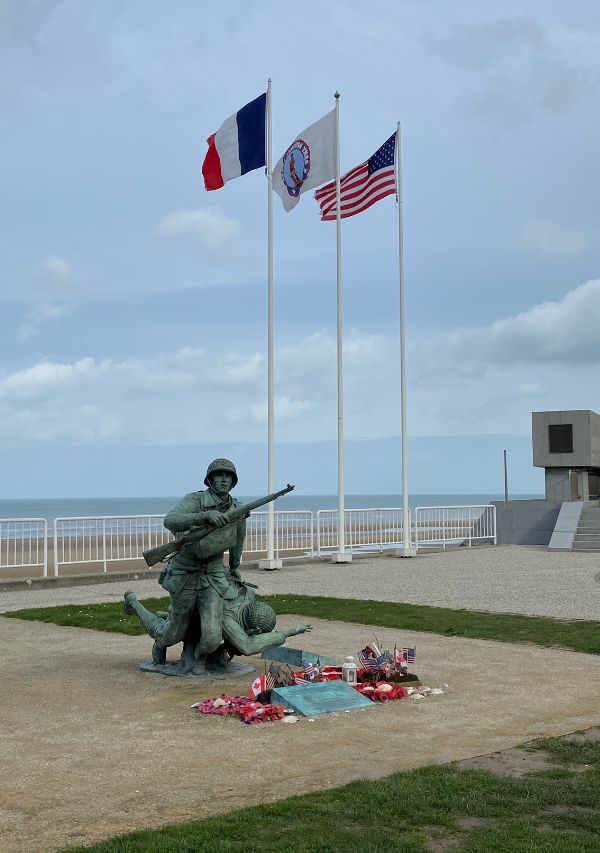
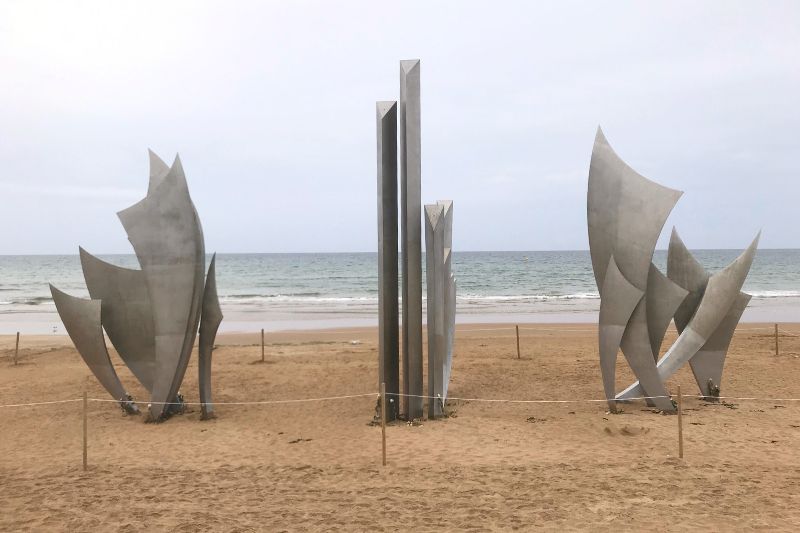
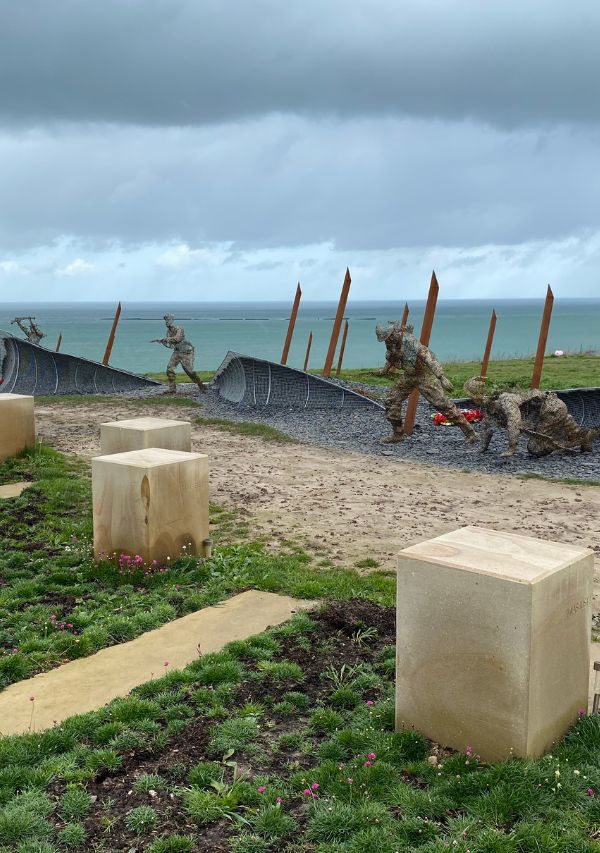
Landing Beaches: Omaha, Utah, Gold, Juno, and Sword. These are the beaches where Allied forces landed on June 6, 1944. Each one has its own history and memorials — Omaha in particular, where some of the heaviest fighting took place, has a striking sculpture (“Les Braves”) right on the sand.
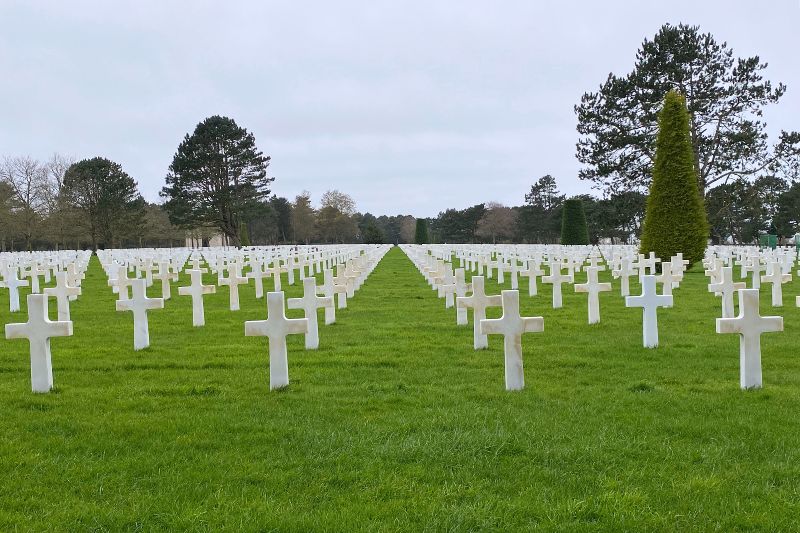
Normandy American Cemetery. The final resting place of more than 9,000 American soldiers. The white crosses stretching across the clifftop, with the coast and ocean behind them, is one of those views that’s hard to describe until you’re standing in front of it.
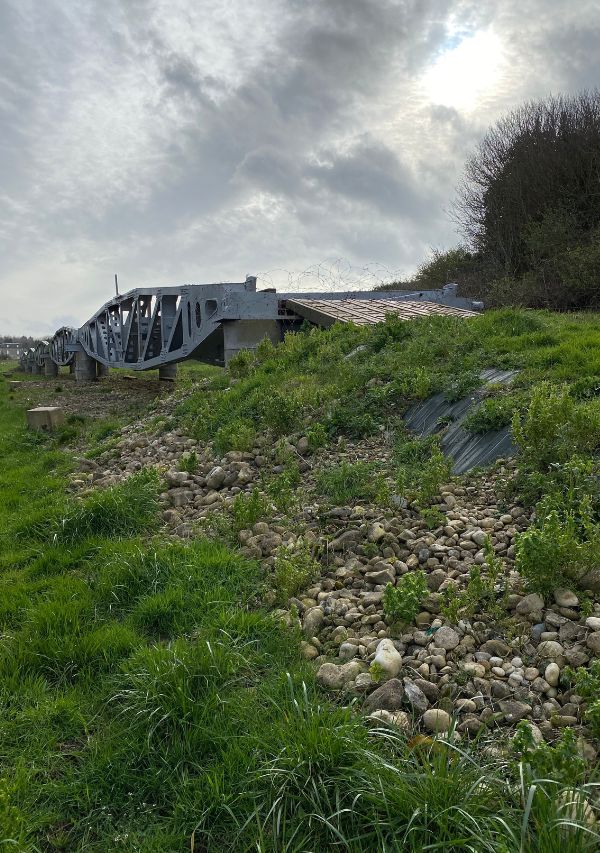
Normandy Landing Museum in Arromanches. Tells the story of the landings and the construction of the artificial harbor at Arromanches — a genuinely impressive feat of wartime engineering. Good artifacts and documents if you want context before or after seeing the beach itself.
Pegasus Bridge and Merville Battery Museum. Pegasus Bridge was the first objective taken by Allied forces on D-Day. The museum covers Operation Deadstick, carried out by the British Airborne Division the night before the main landings.
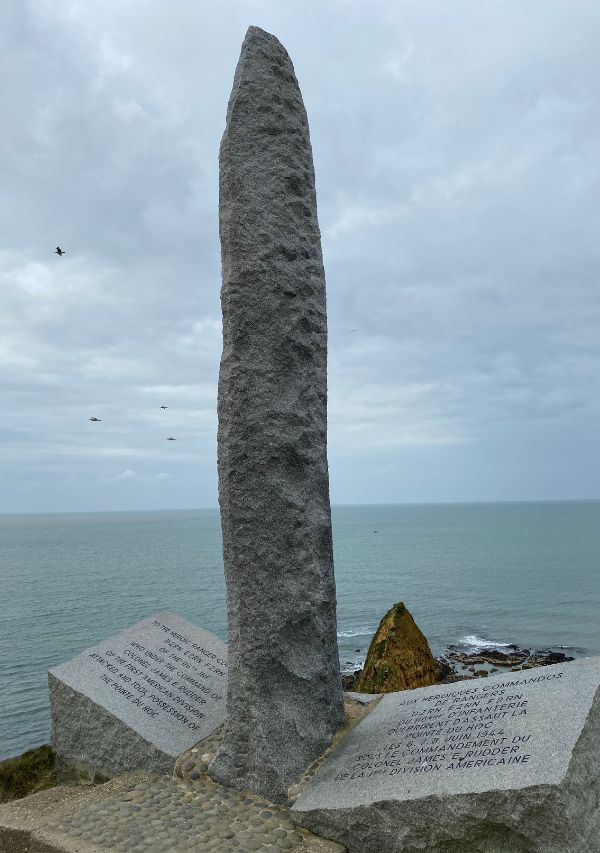
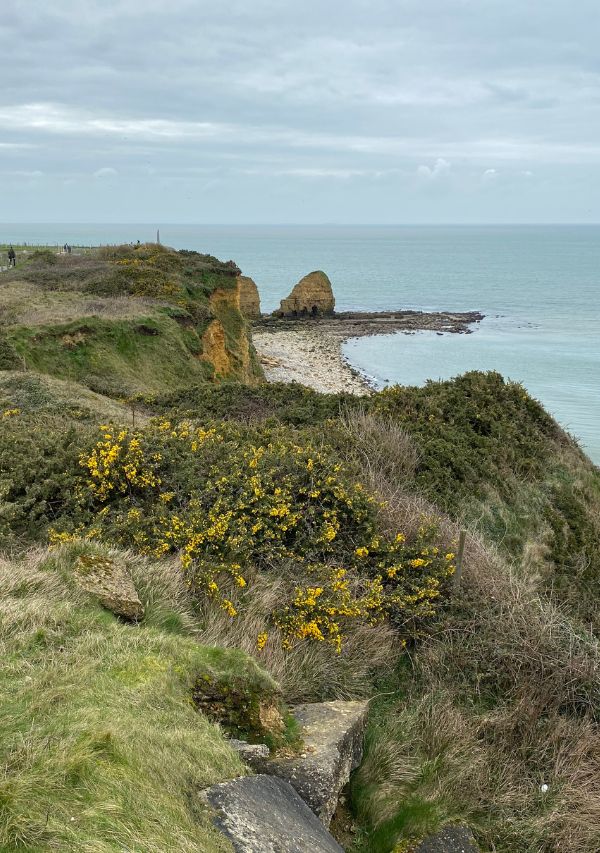
Pointe du Hoc. A cliff captured by American forces during D-Day — the site is still covered in bomb craters, which makes it one of the most visually striking stops on this list. The panoramic coastal view alone is worth the stop.
Caen Memorial Museum. One of the largest, most complete WWII museums in France, with a strong focus on the Normandy Landings and the liberation of France. If you only have time for one museum, this is a strong pick for context.
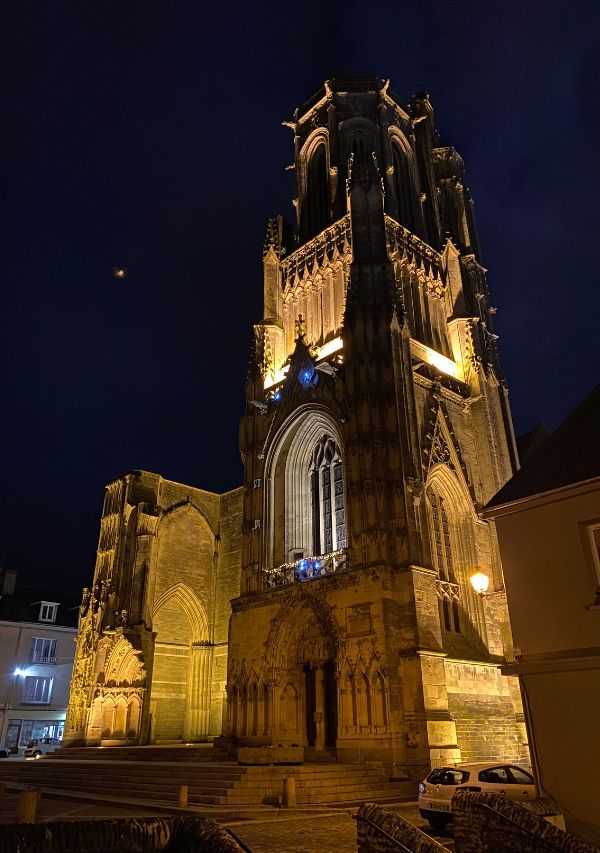
Church of Sainte-Mère-Église. Famous for the story of American paratrooper John Steele, whose parachute got caught on the church bell tower during the battle — there’s a parachutist figure still hanging there today as a memorial.
Museum of the Liberation of Cherbourg. Covers the liberation of Cherbourg by Allied forces, with a solid collection of artifacts and documents.
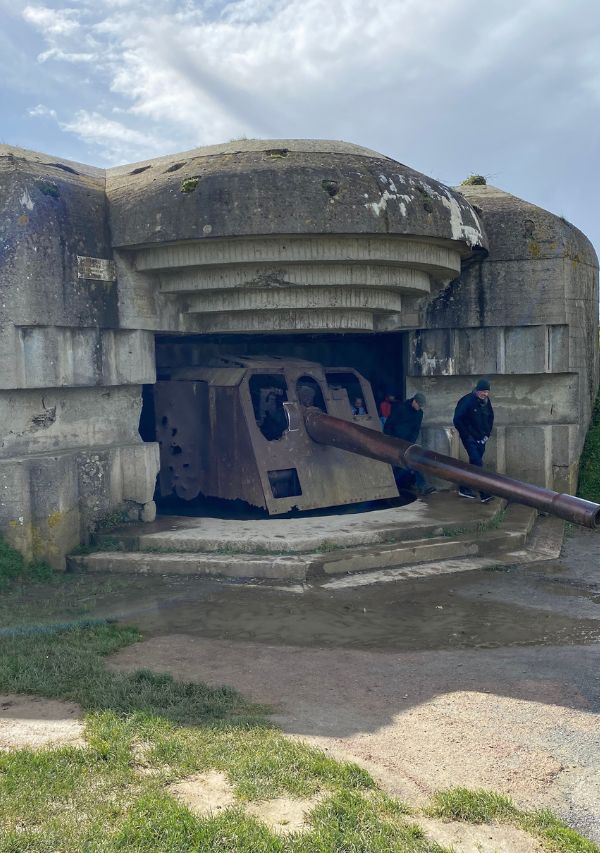
Longues-sur-Mer Battery. A German fortification captured during D-Day — the four original cannons are still in place, surrounded by bomb craters.
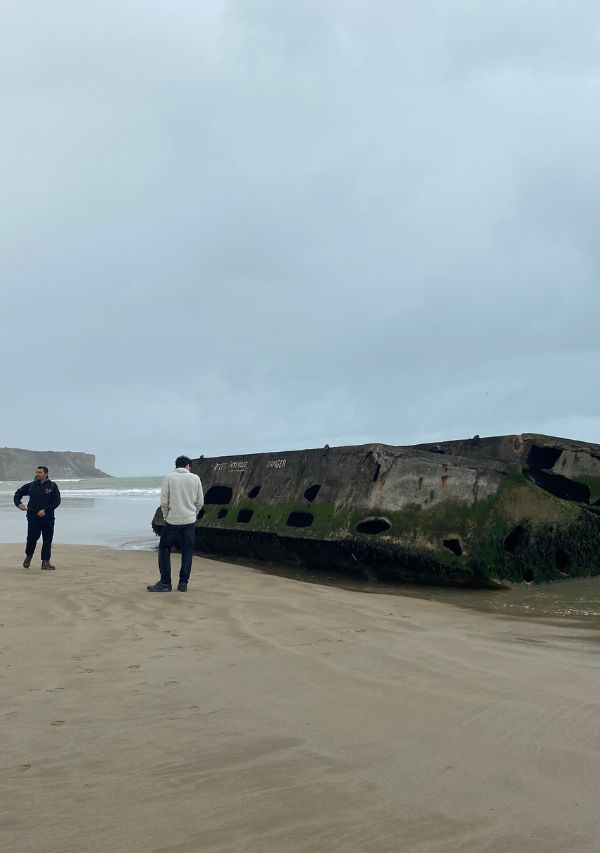
Arromanches Artificial Harbor. Built by the Allies after D-Day to bring in supplies and troops, using prefabricated blocks shipped from England. Some of those blocks are still visible on the beach today.
Normandy Landing Museum in Arromanches. This museum tells the story of the Normandy landings and the construction of the artificial harbor at Arromanches.
The museum has a large number of artifacts, photographs and historical documents that help to understand the importance of this event in the history of the 20th century.
10 Organized Tours from Paris
If you’d rather not drive or navigate the sites yourself, a couple of organized options focus specifically on D-Day history:
D-Day Landing Beaches Day Trip: This tour will take you to the Normandy Landing Beaches, where you can explore the sites where the Allied forces landed on the Normandy coast during World War II.
You will also visit the Normandy American Cemetery and the Normandy Landing Museum in Arromanches.
Normandy Coastal Road Bike Tour: On this tour, you will explore the Normandy coast by bike, passing by beautiful beaches, cliffs and picturesque villages. This tour is ideal for those looking for an active, outdoor experience.
Mémorial de Caen Museum Guided Day Tour from Paris: This tour will take you to the Caen Memorial Museum, one of the largest and most complete museums dedicated to the Second World War in France.
The museum has a large number of interactive and multimedia exhibits covering the history of the conflict, from its origins to its end.
If you’re also interested in the rest of Normandy, I’d treat that as a separate trip rather than bundling it into a D-Day-focused day, for the same reason I mentioned above: the history sites deserve their own pace, without rushing to fit in unrelated stops. I’ll cover those recommendations in a dedicated Normandy post soon.
In summary: Normandy’s D-Day sites are absolutely worth the trip from Paris, whether you dedicate a single focused day or, like us, go all-in for several. Plan ahead, pace yourself, and give the history the attention it deserves.
Plan Your Trip to France
- Paris packing list
- Visit Monet’s House from Paris (Giverny)
- What to see in Caen Normandy
- Visiting the Château de Chenonceau in the Loire Valley
- The Seasons in France
- How to plan a road trip in France
- How to save money on your trip to France
This post may include affiliate links. This means we will receive a small commission if you purchase through our links. There is no additional cost to you. With this, you help us to continue creating free content for you. Thanks for your support!
This post may include affiliate links. This means that we will receive a small fee if you make a purchase through our links. It has no additional cost to you. It’s a win-win!


